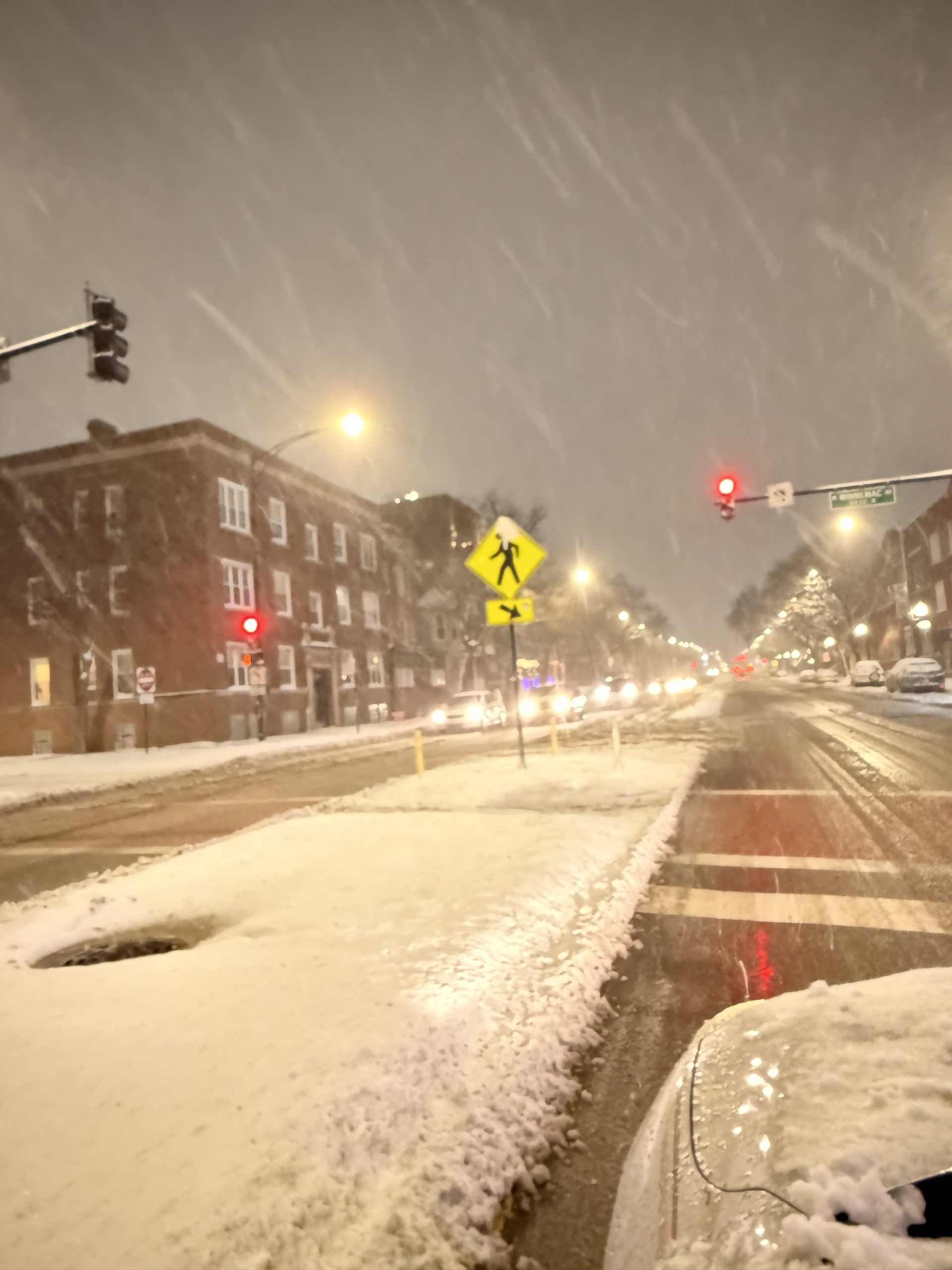
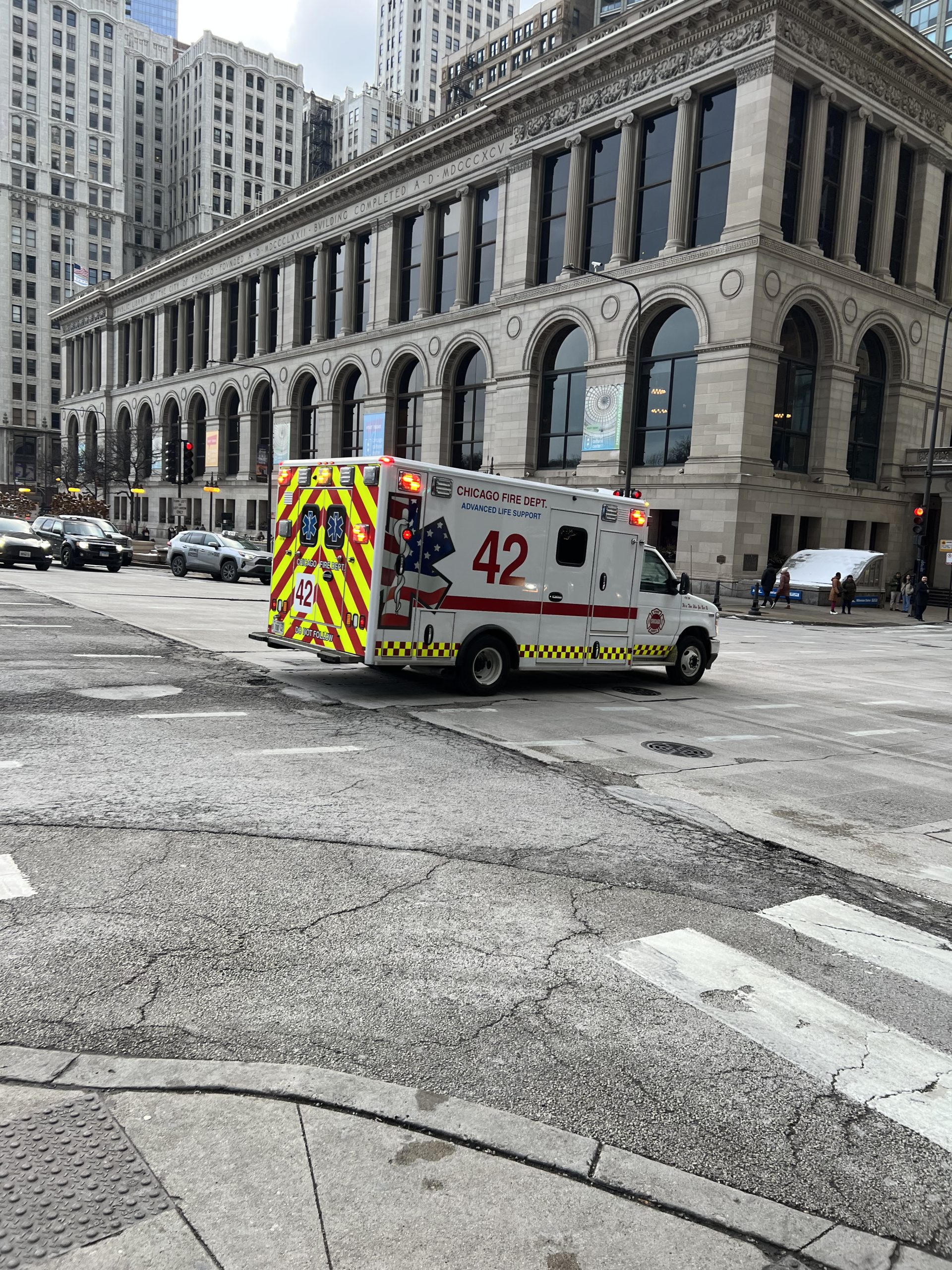
Chicago has been investing heavily in pedestrian safety by installing newly built medians and pedestrian refuge islands across busy roadways. These changes are designed to slow traffic and give pedestrians a safer place to cross and in many ways, they do exactly that.
But there’s an unintended consequence many drivers are now encountering: emergency vehicles no longer have a clear center lane to use. This shift has created confusion, increased risk, and more near-misses on Chicago streets.
The Chicago personal injury lawyers of Zneimer & Zneimer P.C., have seen how roadway design changes can impact real-world safety. Here’s what’s happening and what drivers should do.
How Emergency Vehicles Used to Travel
Traditionally, on multi-lane roads without physical barriers, emergency vehicles ambulances, fire trucks, and police cars could drive down the center of the roadway. Drivers in both directions would pull slightly to the right, creating a clear path in the middle.
This system:
- Kept emergency vehicles separated from oncoming traffic
- Allowed predictable movement
- Reduced the risk of head-on collisions
What’s Changed With New Medians and Pedestrian Islands
Many of Chicago’s newer street designs now include:
- Raised concrete medians
- Pedestrian refuge islands
- Protected bike lanes
While these features improve pedestrian safety, they physically block the center of the roadway. As a result, emergency vehicles often have no choice but to enter oncoming traffic lanes to get around congestion.
That means:
- Emergency vehicles may drive directly toward opposing traffic
- Drivers may panic or freeze
- There is less room to maneuver safely
This added complexity increases the risk of serious crashes, especially at intersections and during rush hour.
What Are Drivers Supposed to Do Now?
Many drivers are understandably unsure how to react. Here’s what Illinois law and best safety practices still require:
- Stay Alert and Slow Down
If you hear sirens or see flashing lights, immediately scan both directions. Emergency vehicles may not be where you expect them.
- Pull to the Right When Possible
Even with medians present, drivers should still:
- Pull over to the right side of the road
- Stop if necessary
- Avoid blocking intersections
- Do Not Move Into Oncoming Traffic
Drivers should never cross a median or drive into opposing lanes to get out of the way. Sudden or illegal maneuvers can cause collisions.
- Expect the Unexpected
Emergency vehicles may:
- Use the oncoming lane
- Approach intersections at unusual angles
- Take wider turns
Defensive driving is more important than ever.
Street safety should protect everyone, pedestrians, drivers, and emergency responders alike. As Chicago’s infrastructure continues to evolve, drivers deserve clear guidance and accountability when things go wrong.
If you’ve been injured in a traffic accident and have questions about liability and road design call the Chicago personal injury lawyers of Zneimer & Zneimer P.C. for a free consultation.