Zneimer & Zneimer P.C. – Chicago Personal Injury Lawyers
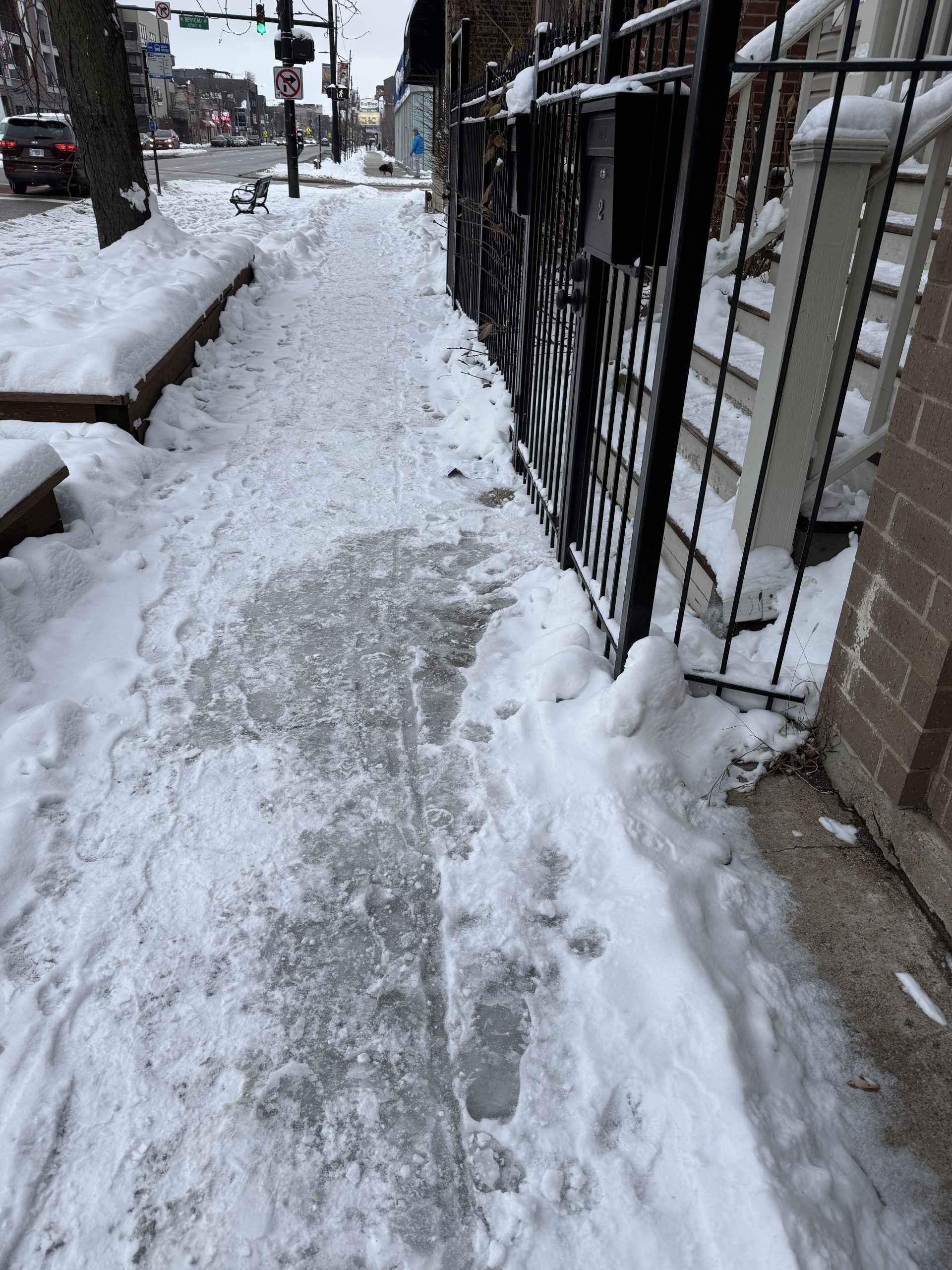
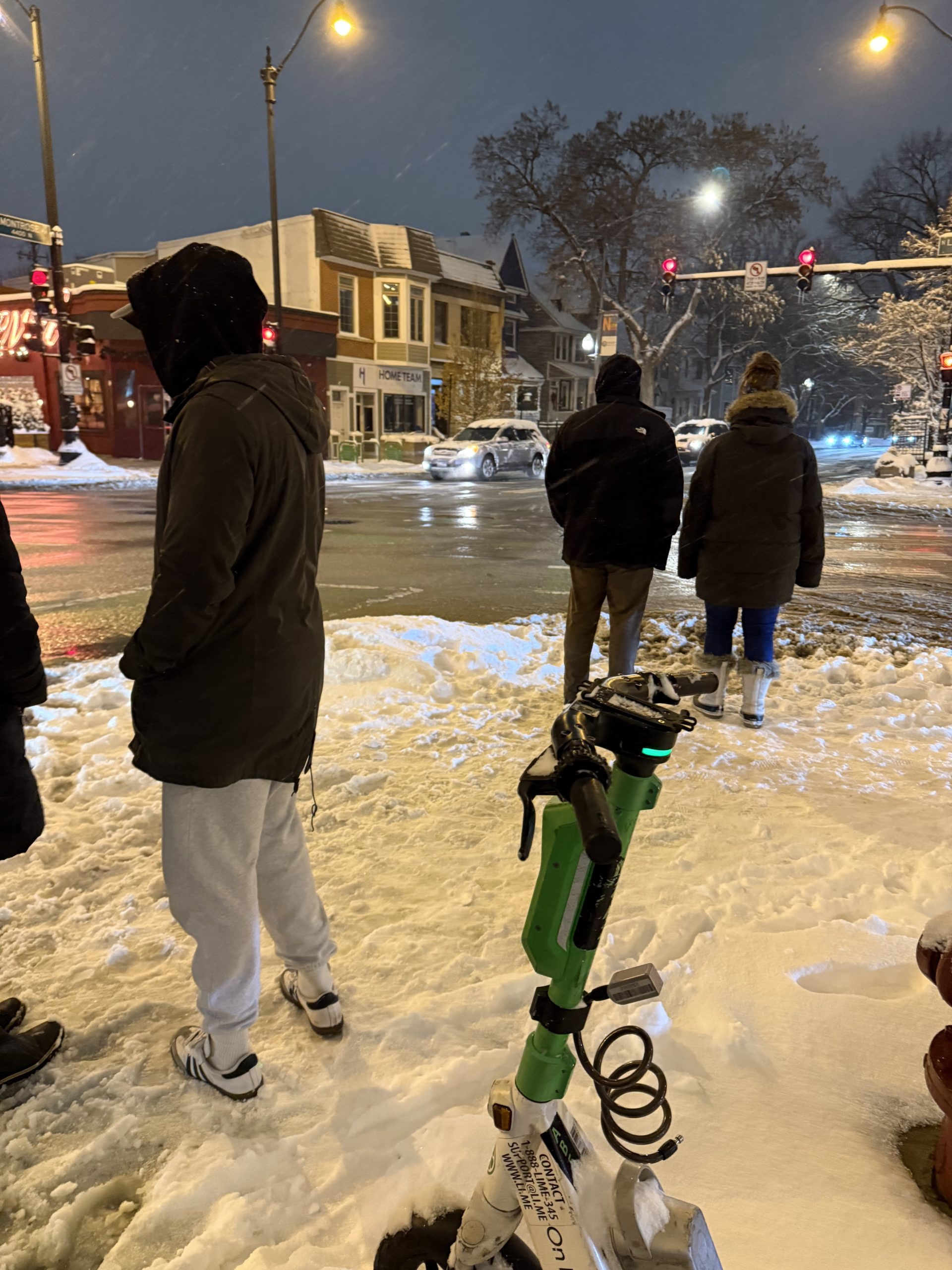
Illinois winters mean snow piles, slick sidewalks, and black ice in parking lots and on outdoor stairs. Falls on ice can cause serious injuries – broken hips, wrist fractures, concussions, and worse. A common question the Chicago slip & fall lawyers of Zneimer & Zneimer hear is:
“If I slip on ice and get hurt, is the property owner automatically responsible?”
In Illinois, the answer is no – not automatically. Liability in snow-and-ice cases is governed by a mix of statutes, court-made rules, and local building codes. This blog explains:
- The general duty property owners owe under Illinois’ Premises Liability Act
- The difference between natural and unnatural accumulations of snow and ice
- How the Snow and Ice Removal Act affects residential cases
- How missing handrails and building code violations can create liability in icy fall cases
- Basic Illinois Premises Liability: The Duty of Reasonable Care
Most Illinois slip-and-fall claims are governed by the Premises Liability Act, 740 ILCS 130. The Act abolishes the old distinction between “invitees” and “licensees” and provides that landowners owe people lawfully on the property a duty of reasonable care under the circumstances.
That duty generally includes:
- Inspecting the property for dangerous conditions
- Maintaining the property in a reasonably safe condition
- Warning about or remedying hazards the owner knows about or should know about
However, when the hazard is snow or ice, Illinois has an important limitation: the natural accumulation rule.
- The Natural Accumulation Rule: No Duty for Ordinary Snow and Ice
Illinois courts have long held that, as a general rule, property owners have no duty to remove natural accumulations of snow, ice, or meltwater from their premises.
- “Natural accumulation” means snow or ice that forms directly from the weather – snowfall, freezing rain, sleet, or normal melting and refreezing.
- If you fall on this kind of ordinary, weather-created ice, there is usually no claim against the owner.
So, not every fall on ice leads to legal liability. To succeed, many cases must show that the ice or snow was unnatural.
- Unnatural Accumulation: When There Can Be Liability
A property owner may be liable if the snow or ice that caused a fall is an unnatural accumulation – meaning it is caused or aggravated by human action or a defective condition on the property.
Courts have found that an unnatural accumulation may exist when:
A property owner has defective gutters or downspouts that dump water onto a walkway, where it freezes into ice. Other examples of unnatural accumulation are when:
- Improper grading, drainage, or slopes channel meltwater across sidewalks or parking lots where it refreezes.
- A business piles up snow in a way that creates ridges, mounds, or icy run-off in walking paths.
- A broken or uneven surface collects water that repeatedly freezes into an ice patch.
In these situations, the dangerous ice isn’t just “weather happening.” It’s the result of how the property is designed, maintained, or used.
Illinois cases describe liability for falls on unnatural ice as arising from:
- A defective condition (for example, faulty gutters) or
- Negligent maintenance or use of the property, which causes or aggravates ice formation.
Evidence matters
Proving an unnatural accumulation often requires:
- Photos or video of the condition right at the time or near to the time of the fall
- Weather records (showing time since last storm, melt-freeze cycles)
- Witnesses who observed recurring ice in the same spot
- Engineering or building-maintenance testimony about drainage, gutters, or grading
This is why it’s crucial for an injured person to take photos of conditions as soon as possible after a fall. If the ice melts after the fall and there are no photos of the ice it may be difficult to provethat the ice was cause by the unnatural condition. However if there are photographs, for example, of a mound of ice forming from the mouth of the down spout and there isn’t ice any where else, then the case is much easier to prove.
- Special Rules for Residential Property: The Snow and Ice Removal Act
Illinois has a separate statute – the Snow and Ice Removal Act, 745 ILCS 75 – aimed at encouraging homeowners to shovel without fear of being sued if someone still slips.
Under this Act:
- Residential property owners are not required by state law to remove snow or ice.
- If a homeowner voluntarily shovels or salts, the Act generally gives them immunity from liability for injuries caused by their negligent snow removal, so long as they are not acting willfully or wantonly.
- The idea is to reassure homeowners that they won’t be punished for trying, even if their shoveling isn’t perfec
Icy Stairs, Missing Handrails or Defective Handrails, and Building Code Violations
A fall on icy stairs is not just about the ice. It can also be about whether the stairs themselves – including handrails – comply with applicable building codes.
Handrails and Illinois/Chicago codes
Building and accessibility codes in Illinois, including the Illinois Accessibility Code and local building codes, generally require handrails on stairways beyond a minimal number of risers and specify how those handrails must be installed and maintained.
For example, the Chicago Building Code provides that:
- All stairways must have walls, railings, or guards on both sides, and
- Handrails are required on both sides of most stairs, with limited exceptions (such as very narrow stairways).
If a property owner fails to install required handrails, or lets them fall into disrepair, that can be a violation of the building code.
How missing handrails tie into liability for falls on ice
Even if snow or ice on stairs might be considered a natural accumulation, an injured person can still have a viable claim where:
- The stairs were required by code to have code compliant handrails,
- The owner failed to comply with the requirements, and
- The lack of a handrails or defective handrails was a proximate cause of the injury – for example, the person slipped on ice but could not arrest their fall because there was no handrail to grab.
In Illinois, a violation of a safety statute or building code is generally treated as evidence of negligence (sometimes called “prima facie evidence”), not automatic liability. A plaintiff still must show:
- The code applied to the property
- The owner violated it
- The violation contributed to causing the injury
In a typical scenario:
A tenant or visitor descends an exterior stairway in winter. The steps are icy. The stairs should have a handrail under the building code, but there is none on one or both sides. The person slips and falls, and an expert testifies that a compliant handrail would likely have allowed the person to catch themselves or significantly reduce the severity of the fall.
Here, the claim may be framed not only as an “ice case” but as a premises liability case based on failure to provide required safety features, with the ice being part of how the dangerous condition manifested.
- Putting It Together: Common Fact Patterns
Here are some examples that illustrate how these rules play out:
Likely no liability (natural accumulation)
- You are walking on a store’s outdoor sidewalk during or just after a snowstorm. Snow and ice are present everywhere. There’s no unusual drainage, no broken downspouts, and no code violations. You slip on a patch of snow or ice that’s just there because of the weather.
- Under the natural accumulation rule, there is typically no duty and no claim against the owner. (Premier Illinois Injury Lawyers)
Possible liability (unnatural accumulation)
- A strip mall has a gutter that dumps water across the main walkway whenever snow melts. The water regularly refreezes overnight, forming a slick sheet of ice in front of the entrance. Shoppers and employees have complained before. You slip on this predictable ice patch and break your ankle.
- Here, the ice may be an unnatural accumulation created by a defective drainage system and notice may be provable – making a claim much more viable. (sherwoodlawgroup.com)
Possible liability (missing handrails + ice)
- You are descending an apartment building’s exterior concrete stairs. It has more than the number of risers that trigger handrail requirements, yet there is only a low wall and no handrail. There is patchy ice on the steps. You slip, reach out, and there is nothing to grab. You fall and suffer serious injuries.
- Even if the ice is arguably a natural accumulation, the code-required handrail was missing. If a building-code violation can be proven and linked to your inability to arrest your fall, the owner may be liable for failing to provide required safety features, independent of any duty to remove natural snow or ice. (American Legal Publishing)
- What To Do If You Slip on Ice or Snow in Illinois
If you are injured in a fall on ice or snow, the steps you take immediately afterward can make a big difference:
- Get medical care right away – your health comes first.
- Photograph the scene as soon as possible. Take out your cell phone and take a few photos of:
- Where exactly you fell
- Any visible ice, snow, puddles, gutters, downspouts, slopes, or missing handrails
- Note weather conditions and timing (Was it snowing? When was the last storm?).
- Report the incident to the property owner/manager and request that they preserve any surveillance footage.
- Keep your shoes – they can become important evidence.
- Contact an experienced premises liability lawyer promptly to investigate.
These cases often turn on subtle details about drainage, building design, and code requirements, and important evidence can disappear quickly through melting, refreezing, or repairs.
- Talk to Zneimer & Zneimer P.C. About a Fall on Ice or Snow
Walking on ice and snow is an unavoidable part of life in Chicago and throughout Illinois – but that doesn’t mean every injury is “just an accident.” When property owners create or ignore unnatural accumulations of ice or fail to provide required safety features like handrails, they can be held responsible for the harm that follows.
If you or a loved one has been hurt in a fall on ice or snow:
Contact Zneimer & Zneimer P.C. for a free consultation.
We can review the facts, evaluate whether natural or unnatural accumulation (and any building code violations) may be involved, and explain your options under Illinois law.