 Chicago Accident Lawyer Blog


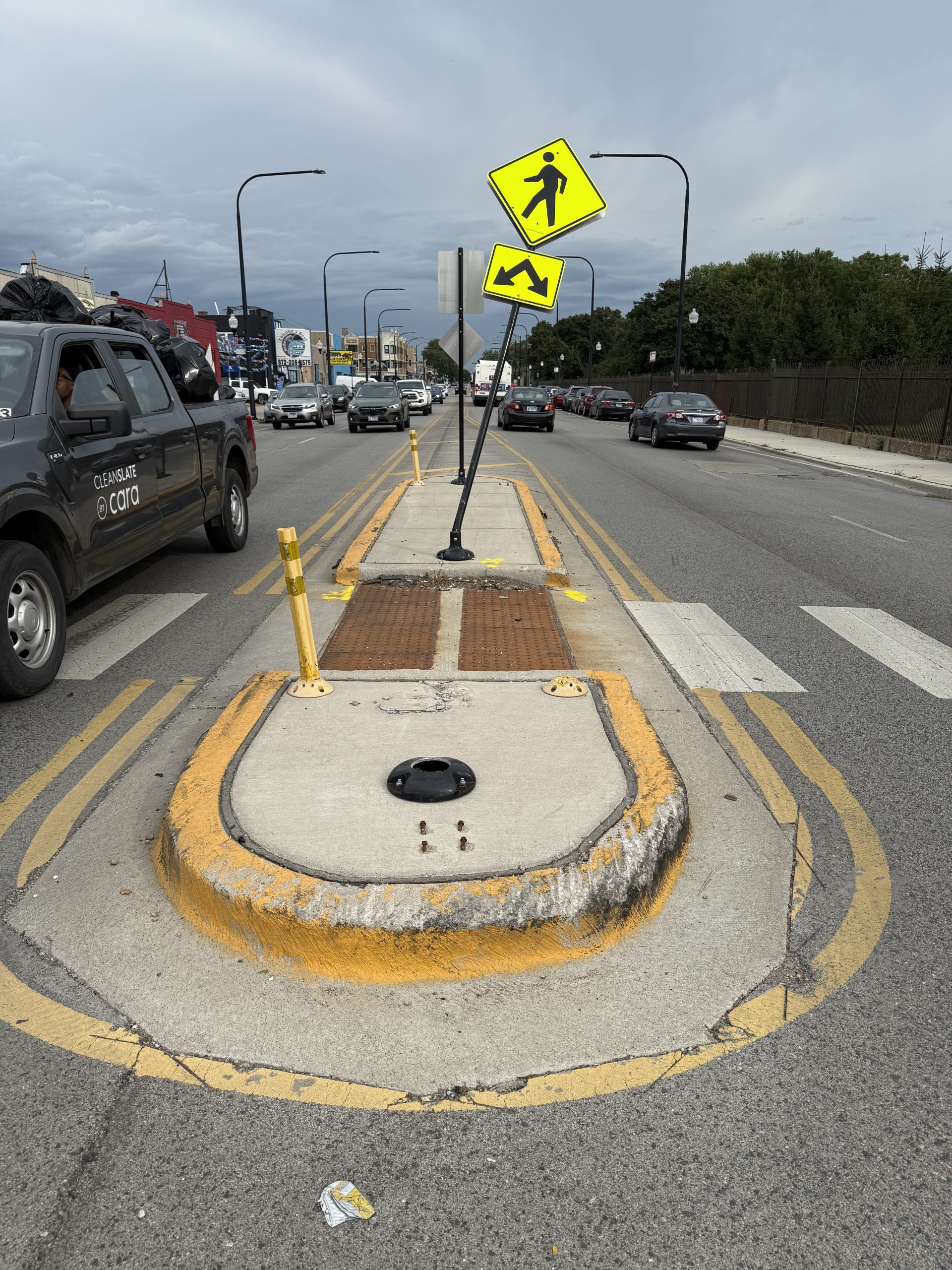
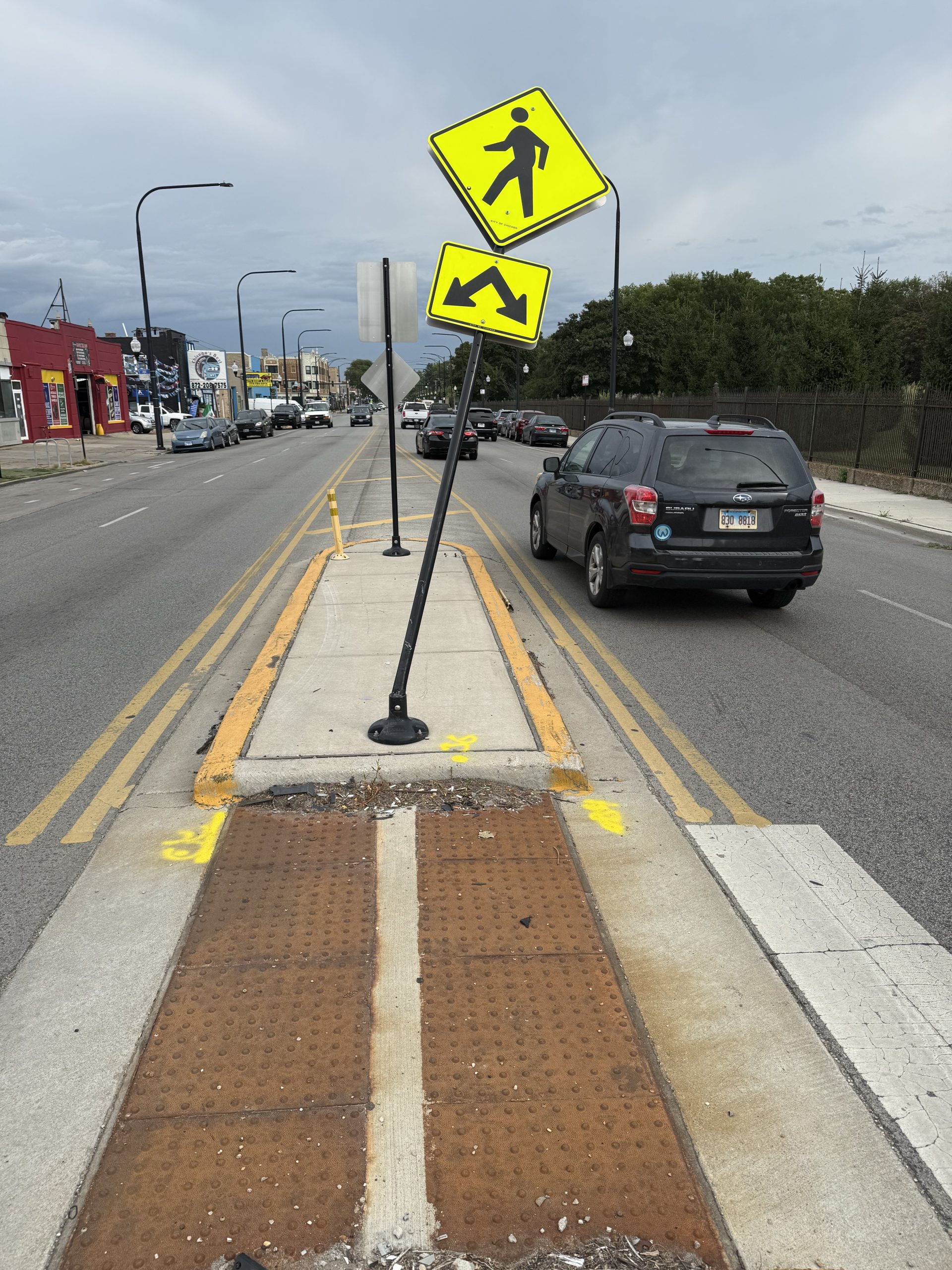
Across Chicago, streets are undergoing dramatic changes. Concrete barriers protecting bicycle lanes, curb bump-outs extending into intersections, and raised pedestrian islands are appearing on streets where motorists have driven for decades.
The Chicago Department of Transportation (CDOT) has installed these structures as part of its efforts to reduce traffic speeds, protect bicyclists, and improve pedestrian safety. These are worthwhile goals and the Chicago personal injury lawyers of Zneimer & Zneimer, P.C. support them. However, there is growing concern that some of these concrete structures are themselves creating dangerous conditions for motorists, particularly when they are difficult to see.
With daylight saving time now over and darkness arriving earlier, the risk of striking these concrete barriers deserves renewed attention.
Chicago’s Concrete Barriers Have Become Controversial
The controversy surrounding Chicago’s street redesigns was highlighted in a May 25, 2026, Chicago Tribune article, “Chicago bike lane construction sparks pushback and fuels political fights.”
The article describes heated disputes over the installation of protected bicycle lanes, concrete bump-outs, and pedestrian islands along Archer Avenue in Brighton Park and Grand Avenue in West Town.
Supporters argue that the redesigns protect bicyclists and pedestrians from motor vehicles. Opponents have raised concerns about reduced traffic lanes, lost parking spaces, increased congestion, interference with emergency vehicles, and the effects on neighborhood businesses.
The controversy has become so intense that protesters and counterprotesters have regularly gathered along Archer Avenue.
Chicago officials have already made modifications to portions of the Archer Avenue project, including removing some concrete barriers, relocating a pedestrian island, and restoring parking spaces.
While much of the public debate has focused on traffic congestion and parking, another important safety issue deserves attention: How easily can motorists see these new concrete obstructions, particularly at night?
Concrete Barriers Can Be Surprisingly Difficult to See
Many of Chicago’s newly installed concrete barriers rise only a short distance above the roadway. Some are narrow, low to the ground, and similar in color to the surrounding pavement.
For drivers accustomed to traveling along a familiar street, these new structures may appear unexpectedly. I, Peter Zneimer have personally drove into a new pedestrian island on Western Ave., a street I have driven down over a thousand times, causing over $1,000.00 damage to my car along with giving me a big jolt.
Consider the circumstances confronting a motorist driving home on a November evening:
- Darkness has already fallen during the evening rush hour.
- Rain makes the pavement shiny and reduces contrast.
- Headlights from approaching vehicles create glare.
- Fallen leaves, snow, or slush partially obscure roadway markings.
- A newly installed concrete island or bump-out extends into an area where vehicles previously traveled.
Under these circumstances, it can be remarkably easy for a driver to strike a concrete barrier before recognizing that it is there.
Unlike a traffic cone or flexible plastic bollard, a raised concrete structure does not give way when struck.
Even a relatively low-speed collision can cause substantial damage to a vehicle and potentially serious injuries to its occupants.
A vehicle striking a concrete island may suffer damaged tires, wheels, suspension components, steering systems, or undercarriage parts. A sudden impact can also cause a driver to lose control, potentially resulting in a secondary collision with another vehicle, bicyclist, or pedestrian.
Reflective Signs Help, But They Do Not Eliminate the Danger
Some concrete pedestrian islands and bike lane barriers have reflective signs, vertical markers, or other warning devices intended to alert motorists to their presence.
These warnings are important, but they are not foolproof.
A reflective sign may be obscured by a vehicle, damaged, dirty, missing, or difficult to distinguish amid the visual clutter of a busy Chicago street. Drivers may also have difficulty recognizing an unfamiliar roadway configuration while simultaneously watching traffic signals, pedestrians, cyclists, and other vehicles.
And even when a concrete barrier has a reflective warning sign, motorists can still strike it.
The Federal Highway Administration has recognized that concrete barriers can be difficult to see at night because they may provide little contrast with the roadway, particularly during rain or when drivers encounter glare from oncoming headlights.
The agency identifies retroreflective devices, warning lights, vertical panels, and reflective pavement markings among the methods used to improve barrier visibility.
These considerations raise an important question: Are Chicago’s new concrete barriers adequately marked and illuminated for the conditions drivers actually encounter?
A small reflective marker may be better than no warning at all, but appropriate warning devices, advance notice, pavement markings, and lighting should all be considered when designing these installations.
Earlier Darkness Makes the Problem More Serious
With the return to standard time in November, Chicago drivers now face darkness during hours when many people are commuting home from work, picking up children, or running errands.
The combination of reduced visibility, frequent fall rain, and unfamiliar roadway designs presents particular challenges.
A concrete barrier that is plainly visible on a sunny afternoon may be far less noticeable on a dark, rainy evening.
The Federal Highway Administration reports that approximately half of traffic fatalities occur at night, even though only about one-quarter of vehicle travel takes place after dark.
That statistic underscores why nighttime visibility must be an essential consideration in roadway design.
Chicago should evaluate these new street configurations not simply under ideal daytime conditions, but also during darkness, rain, snow, and heavy traffic.
Safer Bike Lanes Should Not Mean New Hazards for Drivers
There is no question that bicyclists and pedestrians need protection from dangerous traffic. Protected bicycle lanes and pedestrian refuge islands can serve an important purpose, and properly designed improvements can reduce serious crashes.
But public safety should not be viewed as a competition between bicyclists, pedestrians, and motorists.
A street improvement designed to protect one group of road users should not unnecessarily endanger another.
This is particularly important where permanent concrete structures have been installed on streets that motorists have used for years without such obstructions.
Chicago should consider whether its new concrete installations have:
- Adequate reflective signs and pavement markings.
- Sufficient warning of new or unexpected roadway configurations.
- Proper nighttime illumination.
- Clear visibility during rain, snow, and other adverse weather.
- Appropriate placement that accounts for turning vehicles, buses, and emergency vehicles.
- Regular inspections to identify damaged or missing warning devices.
The city should also closely examine crashes involving these barriers to determine whether certain designs or locations present recurring hazards.
If vehicles repeatedly strike the same concrete island or bump-out, that should prompt an investigation into whether the structure is sufficiently visible and properly designed.
Chicago Needs Streets That Are Safe for Everyone
The debate over Chicago’s protected bike lanes, bump-outs, and pedestrian islands should not be reduced to a choice between motorists and bicyclists.
Both groups deserve safe streets.
But as Chicago continues installing permanent concrete structures along busy roadways, the city must recognize that poor visibility can create real dangers.
Concrete barriers that are difficult to see at night, during rain, or in heavy traffic should not become an accepted hazard simply because they were installed in the name of safety.
As the days grow shorter and winter approaches, Chicago should take a careful look at whether its newest roadway structures are sufficiently visible, properly marked, and safely positioned.
Protecting bicyclists and pedestrians is important. Protecting motorists and their passengers is important, too.
Good street design should accomplish both.
Injured in a Chicago Traffic Accident?
The Chicago personal injury attorneys at Zneimer & Zneimer, P.C. represent individuals injured in motor vehicle, bicycle, pedestrian, and other traffic accidents.
No attorney fees unless we recover compensation for you.
Sources
- Jake Sheridan, Chicago Tribune, May 25, 2026, Chicago bike lane construction sparks pushback and fuels political fights.
- Federal Highway Administration, Highway Design Handbook for Older Drivers and Pedestrians — Construction/Work Zones.
- Federal Highway Administration, Nighttime Visibility Overview.