 Chicago Accident Lawyer Blog


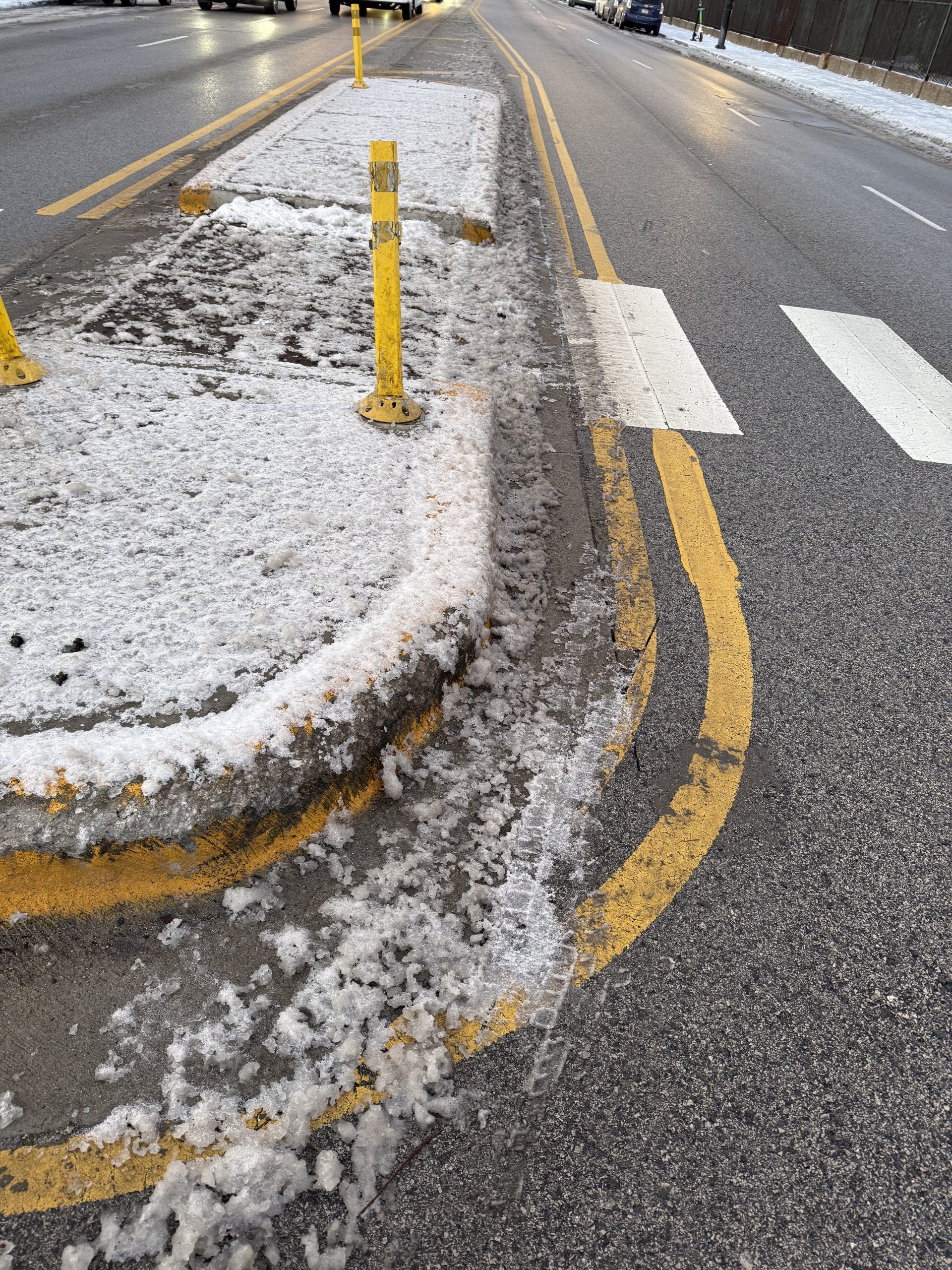
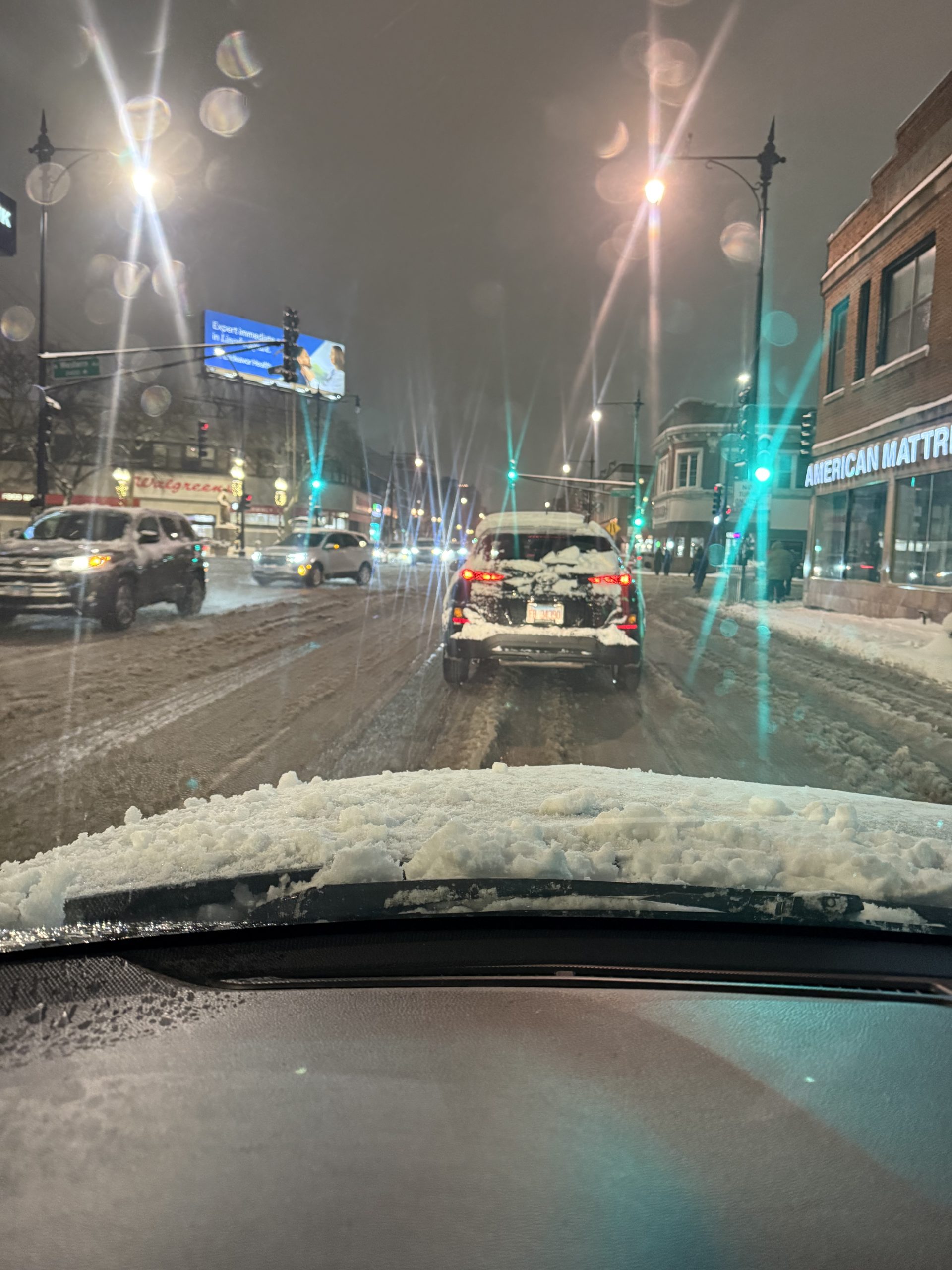
Recently, I was driving home at night in a heavy rain storm. I was driving under the speed limit and keeping sharp attention to the road way because visibility was was a problem with the heavy rain, wind shield wipers furiously clearing the windshield and the glare of the on coming traffic. I was driving home down Western Avenue like I have done thousands of times. The road way was dark and wet and it was difficult to see any painted lines so I was aiming straight down the lane when right in front of me appeared the new concrete “pedestrian refuge median” that had been recently been constructed in the middle of the road way. My car wheel hits it at about 20 MPH blowing out the tire and leaving me shaken. I was left wondering how I could have hit the pedestrian island when I was going straight. Upon inspection of the new pedestrian island, I could see that drivers are now required to jog to the right to avoid hitting the pedestrian island. Upon inspection of the pedestrian island with all its black tire marks and chipped cement, it is clear that I wasn’t the only one to hit the cement. The personal injury lawyers of Zneimer & Zneimer, P.C. in this article will discuss the benefits and dangers of the recent additions to our Chicago roadways.
If you drive in Chicago, you’ve seen the changes: cement “bump-outs” at corners, concrete medians, refuge islands, protected bike lanes, and more roundabouts in places that used to be simple, wide-open intersections.
These features are often installed under the umbrella of Vision Zero—a traffic-safety philosophy that aims to reduce (and ultimately eliminate) serious crashes by redesigning streets so that inevitable human mistakes don’t turn into life-altering injuries.
The big idea sounds hard to argue with: fewer tragedies, safer crossings, calmer traffic. But on Chicago streets—especially in rain, darkness, and winter—some of these designs can introduce real hazards for motorists, too. And when drivers hit concrete at speed, the injuries can be severe for everyone involved.
Below is a fair look at the theory, the benefits, and the motorist safety concerns we see in the real world.
That are bump-outs, medians, refuge islands, protected bike lanes, and roundabouts?
You’ll hear different names (and every neighborhood seems to have its own “version”), but generally:
- Bump-outs (curb extensions): Concrete extensions at intersections that narrow the roadway near the corner.
- Concrete medians: Raised barriers dividing directions of travel or channeling turns.
- Refuge islands: Small raised “landing pads” mid-crosswalk so pedestrians can cross in stages.
- Protected bike lanes: Bike lanes separated from traffic by curbs, concrete, posts, or parking.
- Roundabouts / traffic circles: Circular intersections that replace stop-and-go with slower, continuous movement.
The Vision Zero theory: design the street so mistakes aren’t fatal
Vision Zero is built on a few core assumptions:
- People will make mistakes. Even careful drivers misjudge speed, glance at a phone, or fail to see someone stepping off a curb.
- Speed is the multiplier. A crash at 20 mph is fundamentally different from a crash at 35–40 mph.
- Street design shapes behavior. If the road “feels” wide and fast, drivers tend to go faster. If it feels constrained and complex, drivers slow down.
So these redesigns try to do two main things:
- Slow vehicles down (especially at intersections, where the worst pedestrian crashes happen).
- Reduce conflict points where cars and pedestrians/bikes interact.
Why these features can help pedestrians (and cyclists)
1) Shorter crossing distances
Bump-outs bring the curb closer to the travel lane, so pedestrians cross fewer feet of pavement. Less time in the roadway generally means fewer opportunities for a collision.
2) Better visibility at corners
A curb extension can push pedestrians forward so they’re not hidden behind parked cars. Drivers turning right (or left) can see people sooner—when conditions are good.
3) A “pause point” in the middle
Refuge islands let pedestrians cross one direction at a time. That matters on wide, multi-lane streets where crossing in a single shot can feel like sprinting across a runway.
4) Fewer high-speed turns
Concrete channelization and tighter turning radii often force drivers to take corners more slowly and more likely to see a pedestrian in the crosswalk.
5) Protected space for bikes
A protected bike lane aims to reduce the most common fear cyclists have—being sideswiped or clipped by passing traffic. Separation can reduce certain types of crashes and encourage more predictable positioning.
The counterpoint: how these same designs can be dangerous for motorists in Chicago
Here’s the uncomfortable truth: concrete doesn’t forgive. When a street feature is hard to perceive—or when road conditions are ugly—these installations can become impact hazards.
1) Hard to see at night, especially in rain
Chicago has plenty of streets with uneven lighting, glare from oncoming headlights, and reflective “noise” from wet pavement. Low-profile concrete islands and medians can blend into the roadway.
Common driver complaints we hear and have experienced myself:
- The island appears “too late” in your headlights.
- The island, median or protected bike lane barrier is covered in snow and is not visible.
- The paint/reflectors are worn down or covered in white salt film.
- The feature is not intuitively placed for a driver unfamiliar with the area.
- The geometry changes quickly (a lane “shifts” around a protected lane or island).
- The median, protected bike lane barrier or pedestrian island is cement color and difficult to see, especially at night.
2) Sudden lane shifts and “surprise geometry”
Some installations require traffic to subtly curve around islands or protected lanes. If you’re following a car, watching a light, scanning for pedestrians, and the lane alignment changes abruptly, it’s easy to clip a curb or median—especially for larger vehicles.
3) Winter: snow cover turns fixed hazards into hidden hazards
Chicago winter is where theory meets reality. Snow introduces multiple risks:
- Concrete islands and medians become invisible when covered or rimmed with plowed snow.
- Plows can create snow berms that obscure the shape and edges.
- Melt/refreeze can produce black ice near intersections where vehicles brake and turn.
A driver can think they have open pavement and suddenly hit a buried curb extension or refuge island. That can cause:
- Loss of steering control
- Tire blowouts or wheel damage
- A spin into adjacent lanes
- Secondary crashes (rear-ends or sideswipes)
4) Impacts can trigger loss of control and serious vehicle damage
Hitting a raised median or island is not like tapping a plastic bollard. The consequences can be immediate:
- Bent rims, damaged tires, suspension damage
- Airbag deployment and interior injuries
- Vehicle veering into pedestrians, cyclists, or oncoming traffic
Even careful drivers can get caught when visibility is compromised—or when they’re navigating unfamiliar streets at night.
5) Roundabouts: less stop-and-go, but more confusion for some drivers
Roundabouts can reduce certain severe crash types, but they can also create new problems:
- Misjudging entry gaps
- Confusion about who yields
- Pedestrian crossings placed close to the circle
- Larger vehicles tracking wider and clipping curbs
In poor weather or darkness, a driver unfamiliar with the layout may make a sudden correction and strike the curb—or another vehicle.
“Vision Zero works better in compact European cities”—does it fit Chicago?
It’s fair to ask whether a strategy that emphasizes tight geometry and slower speeds fits a city where:
- Many arterials are wide and high-volume
- People commute longer distances
- Weather routinely reduces visibility and traction
- Delivery trucks, buses, and larger vehicles dominate certain corridors
Compact central European cities often have:
- Slower baseline speeds
- Narrower rights-of-way
- More consistent street lighting and older “slow-street” patterns
- Less severe winter weather in many regions compared to Chicago’s freeze/thaw + snowplow reality
That doesn’t mean Chicago shouldn’t protect pedestrians and cyclists—it means design details matter here: visibility, reflectors, paint durability, signage, lighting, snow maintenance, and whether changes are intuitive for drivers who don’t travel that street every day.
Safety tips for Chicago drivers around bump-outs, medians, refuge islands, protected bike lanes, and roundabouts
1) Assume the lane may “shift” near intersections.
If you’re approaching an unfamiliar intersection, don’t hug the edge of the lane. Give yourself margin.
2) Slow down earlier than you think you need to—especially at night and in rain.
Your headlights and reaction time matter. Lower speeds buy you time to perceive concrete features.
3) In snow, treat every intersection like it has hidden curbs.
If snow is covering the pavement, assume there’s a refuge island or curb extension where you least expect it.
4) Avoid last-second lane changes near protected bike lanes.
These corridors often have unusual striping and separators. Commit early.
5) Watch for pedestrians “staged” on refuge islands.
A pedestrian may be halfway through a crossing. Don’t assume the crosswalk is clear just because someone isn’t on the curb.
6) At roundabouts: slow, yield, and look left—then right for crosswalks.
Entry speed is everything. Don’t accelerate until you’ve cleared the pedestrian crossing area.
7) If visibility is poor, increase following distance.
The car ahead may swerve at the last second to avoid a median you can’t yet see.
8) If you strike a curb/median, pull over safely and document conditions.
Photos of lighting, weather, snow cover, missing reflectors, and signage can matter later. If anyone may be injured, call 911.
Chicago’s push for safer streets has a clear goal: reduce catastrophic pedestrian and cyclist injuries. But fixed concrete features can also raise safety questions for motorists, especially in a city with dark winter evenings, heavy rain, and snowstorms. I personally am driving slower and watching more carefully after hitting a pedestrian island.
The Chicago personal injury lawyers of Zneimer & Zneimer P.C. are here to help if you are ever injured in an accident. We provide free consultations to discuss your case.