 Chicago Accident Lawyer Blog


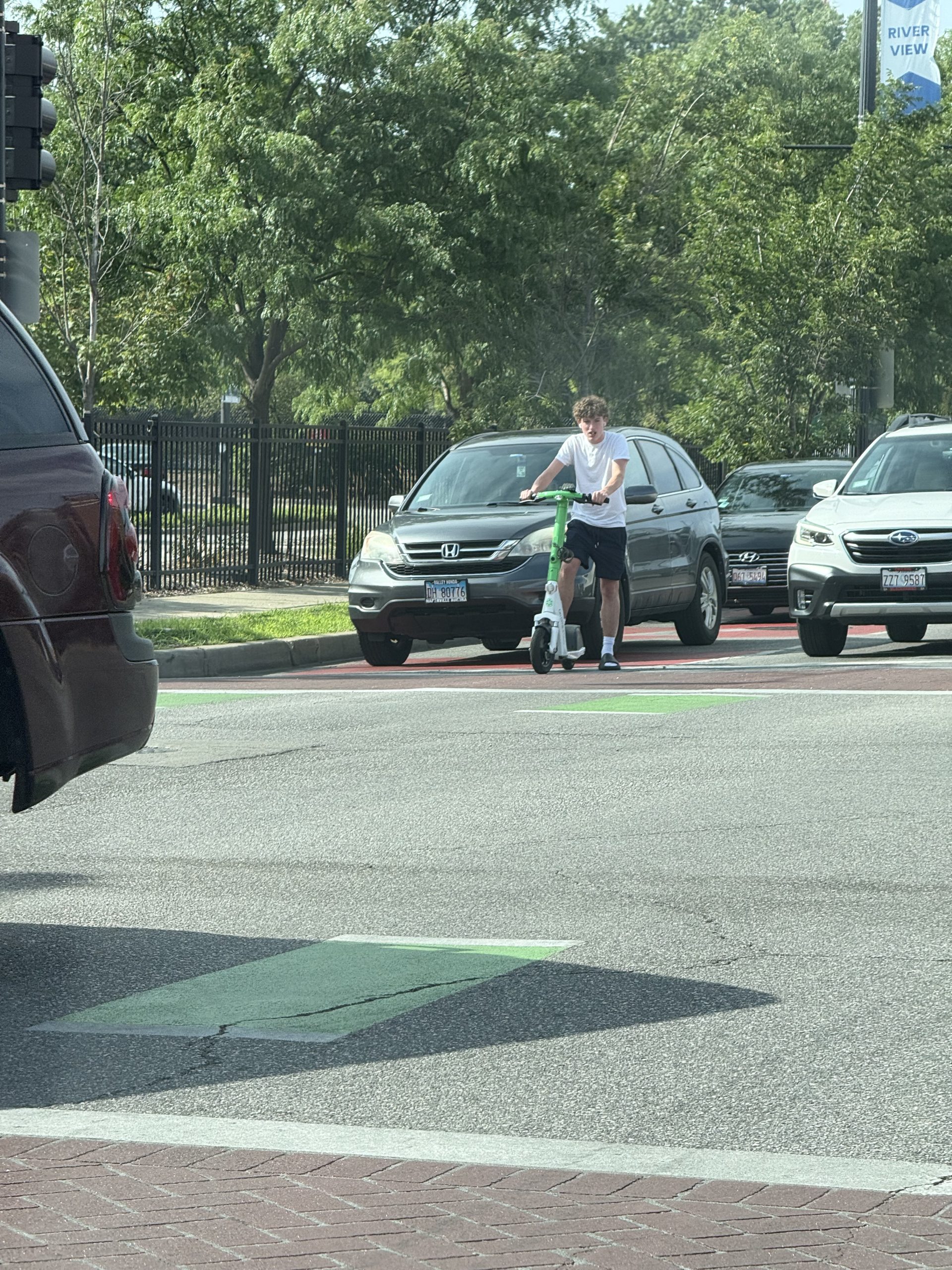
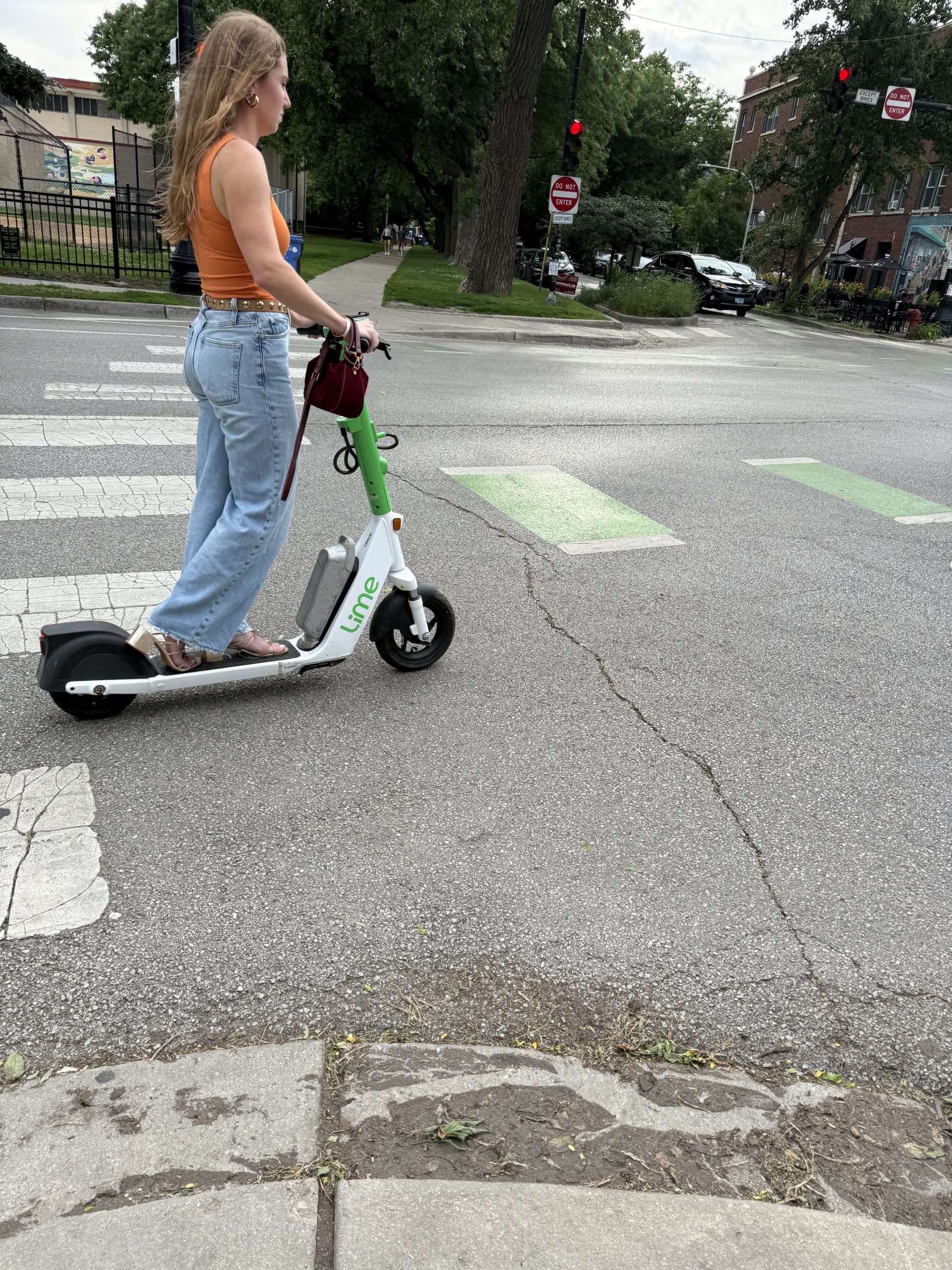
Electric scooters have become a common sight on Chicago streets. They offer a convenient way to travel short distances and reduce traffic congestion, but they have also created new safety concerns for pedestrians, bicyclists, and motorists.
The e-scooter lawyers of Zneimer & Zneimer P.C., frequently see dangerous riding behavior that increases the risk of serious injury. One of the most common questions we hear is:
“Are e-scooters allowed to ride in the middle of busy streets like cars?”
The answer is generally no—at least not when safer alternatives exist.
Where Can E-Scooters Legally Be Ridden in Chicago?
Under Chicago’s scooter regulations, shared electric scooters are intended to operate much like bicycles.
The safest and preferred place: Bike lanes and bike paths
Chicago requires shared e-scooters to use bike lanes and bicycle paths whenever they are available. These facilities are designed to separate slower riders from fast-moving vehicle traffic and provide the safest environment for everyone.
Are scooters allowed on sidewalks?
Generally, no.
Scooters are not supposed to be operated on sidewalks except in very limited circumstances, such as when necessary to enter or leave adjacent property. This rule exists primarily to protect pedestrians, who often cannot hear an electric scooter approaching from behind.
What Happens When There Is No Bike Lane?
This is where many riders—and drivers—become confused.
If there is no bike lane or bike path, Chicago allows scooters to travel on city streets. However, the City also makes clear that these streets are not intended for scooter use.
That distinction matters.
For example, many Chicago drivers have likely encountered someone riding an e-scooter down the middle of a busy traffic lane on streets such as:
- Western Avenue
- Ashland Avenue
- Cicero Avenue
- Pulaski Road
These are high-volume arterial streets carrying buses, delivery trucks, and vehicles traveling at significantly higher speeds than most scooters.
While a scooter rider may technically be on the roadway where no bike lane exists, riding in the center of a heavily traveled lane can create dangerous situations for everyone involved. Motorists may have difficulty passing safely, while scooter riders have little protection if they are struck.
How Old Must You Be?
Chicago’s shared scooter program has generally required riders to be 18 years or older to rent and operate shared scooters. In 2026, Illinois enacted legislation that is expected to standardize statewide rules beginning January 1, 2027, including lowering the minimum age for low-speed e-scooter riders in many circumstances to 16. Riders should understand that different rules may apply depending on whether they are using a shared rental scooter or a privately owned scooter and when the new state law takes effect. (Axios)
Where Is It Actually Safe to Ride?
Just because riding somewhere may be legal does not always mean it is safe.
The safest places to ride an e-scooter include:
- Protected bike lanes
- Dedicated bicycle paths
- Lower-speed neighborhood streets
- Streets with lighter traffic and lower speed limits
The highest-risk locations include:
- Busy multi-lane arterial roads
- Roads with speeds of 35 mph or more
- Congested intersections
- Streets with heavy truck or bus traffic
- Areas where there is little room for motorists to safely pass
Because e-scooters are small, quiet, and difficult for drivers to see, riders are especially vulnerable to crashes involving turning vehicles, opening car doors, and distracted drivers.
Common Causes of E-Scooter Accidents
Our firm has seen injuries resulting from:
- Drivers making left turns without yielding
- Vehicles turning right across a scooter’s path
- Distracted driving
- Drivers opening car doors into riders (“dooring”)
- Poorly maintained streets and potholes
- Drivers attempting unsafe passes on narrow roads
- Defective or malfunctioning scooters
Even low-speed collisions can cause devastating injuries because riders have virtually no physical protection especially if the rider is not wearing a helmet.
Serious Injuries Are Common
E-scooter crashes frequently result in:
- Traumatic brain injuries
- Concussions
- Spinal cord injuries
- Broken wrists and arms
- Shoulder injuries
- Pelvic fractures
- Facial fractures
- Road rash requiring skin grafts
A helmet can significantly reduce the risk of head injuries, yet many riders choose not to wear one.
How an Experienced Personal Injury Lawyer Can Help
After an e-scooter collision, insurance companies often try to shift blame onto the rider.
An experienced personal injury attorney can help by:
- Investigating the crash scene
- Obtaining surveillance and traffic camera footage before it is erased
- Interviewing witnesses
- Securing police reports
- Determining whether the driver violated traffic laws
- Investigating whether roadway defects contributed to the crash
- Identifying all available insurance coverage
- Working with medical experts to document the full extent of your injuries
- Negotiating with insurance companies
- Filing a lawsuit when a fair settlement cannot be reached
Evidence disappears quickly after traffic collisions. Video footage may be overwritten within days, witnesses become difficult to locate, and damaged vehicles are repaired or discarded. Prompt legal representation can make a significant difference in preserving the evidence needed to prove your case.
Contact Zneimer & Zneimer P.C.
If you or someone you love has been injured in an e-scooter accident—whether you were riding the scooter, walking as a pedestrian, or driving a vehicle involved in the collision—the attorneys at Zneimer & Zneimer P.C. can investigate your case and fight for the compensation you deserve.
Our experienced Chicago personal injury lawyers understand the unique legal and insurance issues involved in e-scooter crashes and are re