February 10, 2010

Chicago’s Michigan Ave. a hot spot for auto accidents involving personal injury

Chicago Illinois is a major city, and like most large urban areas, tend to have a vast amount of auto accidents. Chicago’s Michigan Ave. seems to be a hot spot for, not just auto accidents, but accidents that involve personal injury.
A recent Chicago Sun-Times article highlights such accidents and injuries:
“Four people were critically injured in an auto accident on Michigan Avenue near Grant Park early Sunday.
At 4:10 a.m., police responded to an auto accident involving at least three vehicles at 450 S. Michigan Ave., according to police News Affairs Officer Hector Alfaro. Several people were injured, he said, but it was not immediately known how many.
At 4:20 a.m., fire personnel were notified and responded to an auto accident at South Michigan Avenue and East Congress Parkway, according to Fire Media Affairs Chief Kevin MacGregor.
An EMS Plan 1 was called for the accident, he said. Four people were critically injured and several refused treatment.
Two people were taken in critical condition to John H. Stroger, Jr. Hospital of Cook County; one was taken in critical to Mount Sinai Hospital; and one was taken in critical to Northwestern Memorial Hospital, MacGregor s”
Driving in a city the size of Chicago, or any city, can be a hazardous activity, but when injuries tend to be common there needs to be some action taken. Whether it be, slow down, stricter traffic laws or compensation for personal injury, some action needs to be taken. When injured in an auto accident reporting such injury and seeking legal counsel is imperative to gaining the compensation deserved.
Accidents will always happen, drive safe, follow all traffic laws, and pay attention to other drivers. When all steps are followed and you have inevitably gotten into an accident, seek legal counsel, know your rights, and follow through with the steps to hold others accountable for their failure to do the same.

January 3, 2010

Texting and driving is now against the law in Illinois

Records compiled by the National Highway Traffic Safety Administration show that driver distraction is a significant factor in traffic crashes resulting in injury or death. The use of a cell phone while driving can increase the chances of becoming involved in a crash by 400 percent.

On January 1, 2010, two new traffic laws take effect in Illinois.

The first traffic law restricts drivers under the age of 19 (with an instruction permit or graduated license) from using a wireless or cellular phone while driving. This law law also prohibits the use of wireless telephones for all drivers, regardless of age, while operating a vehicle in a school zone or construction zone.

The law provides an exception to exclude a GPS or navigation system, and creates an exception to the electronic message prohibition for a driver using an electronic communication device while parked on the shoulder of a roadway, and creates an exception for a driver using an electronic communication device when the vehicle is stopped due to normal traffic being obstructed and the driver has the motor vehicle transmission in neutral or park.

The second traffic law prohibits text messaging, composing, reading or sending electronic messages, or accessing internet sites while driving a motor vehicle in a school speed zone or a construction or maintenance speed zone, except for a person engaged in a highway construction or maintenance project for which a construction or maintenance speed zone has been established when the person is using a wireless telephone in furtherance of that project.

The law adds exceptions for specified emergency purposes and law enforcement officers or emergency vehicle operators when performing their official duties. It also adds an exception to wireless telephone in school and construction zones prohibition for a person using a wireless telephone in voice-activated mode.

December 27, 2009

Illinois Outlaws Driving While Texting

As of January 1, 2010, Illinois makes texting while driving illegal. Specifically, the new law prohibits the operation of a motor vehicle while using an electronic communications device to compose, send, or read an electronic message

September 12, 2009

Driver Fatigue: A Factor in Illinois Truck Crash?

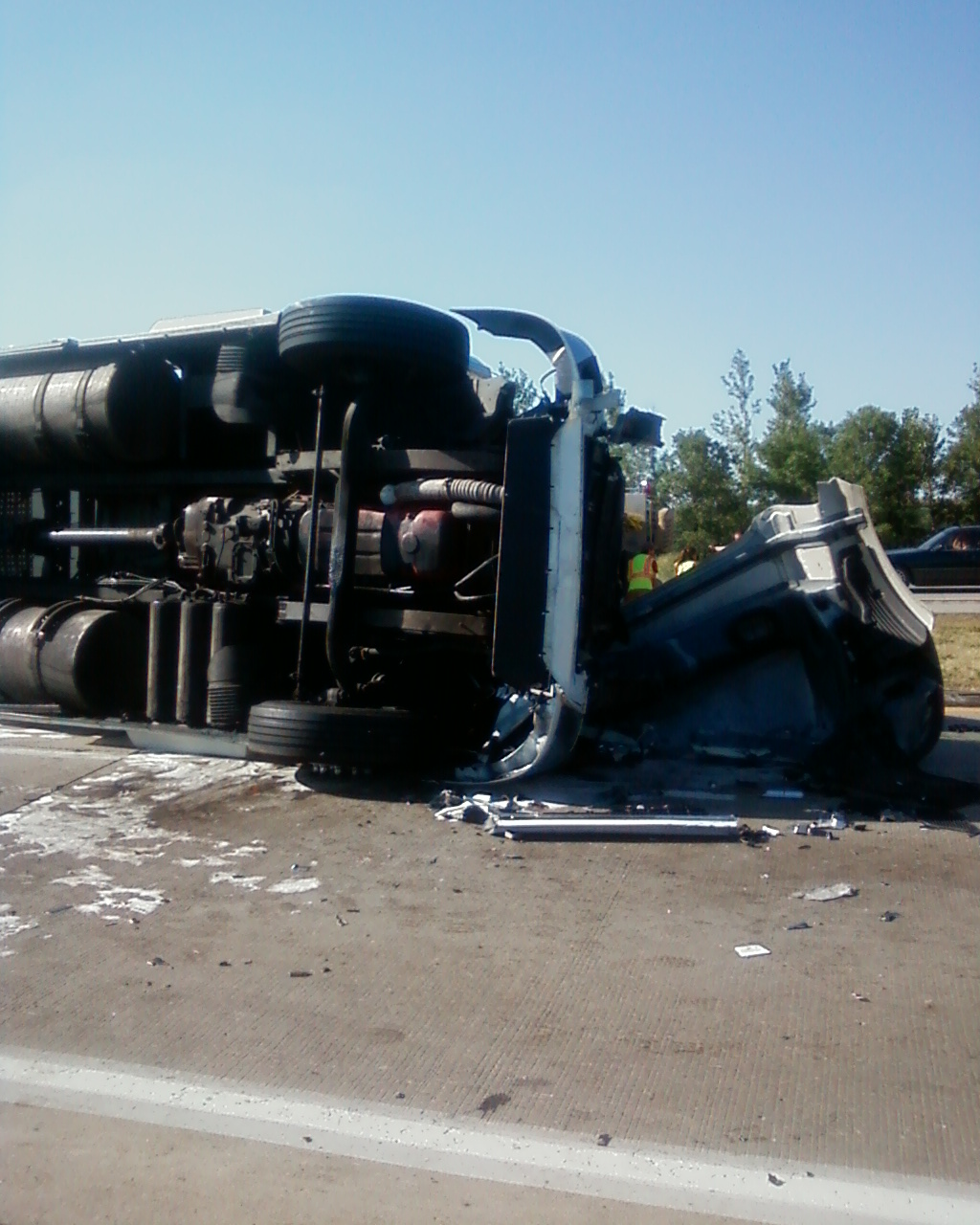
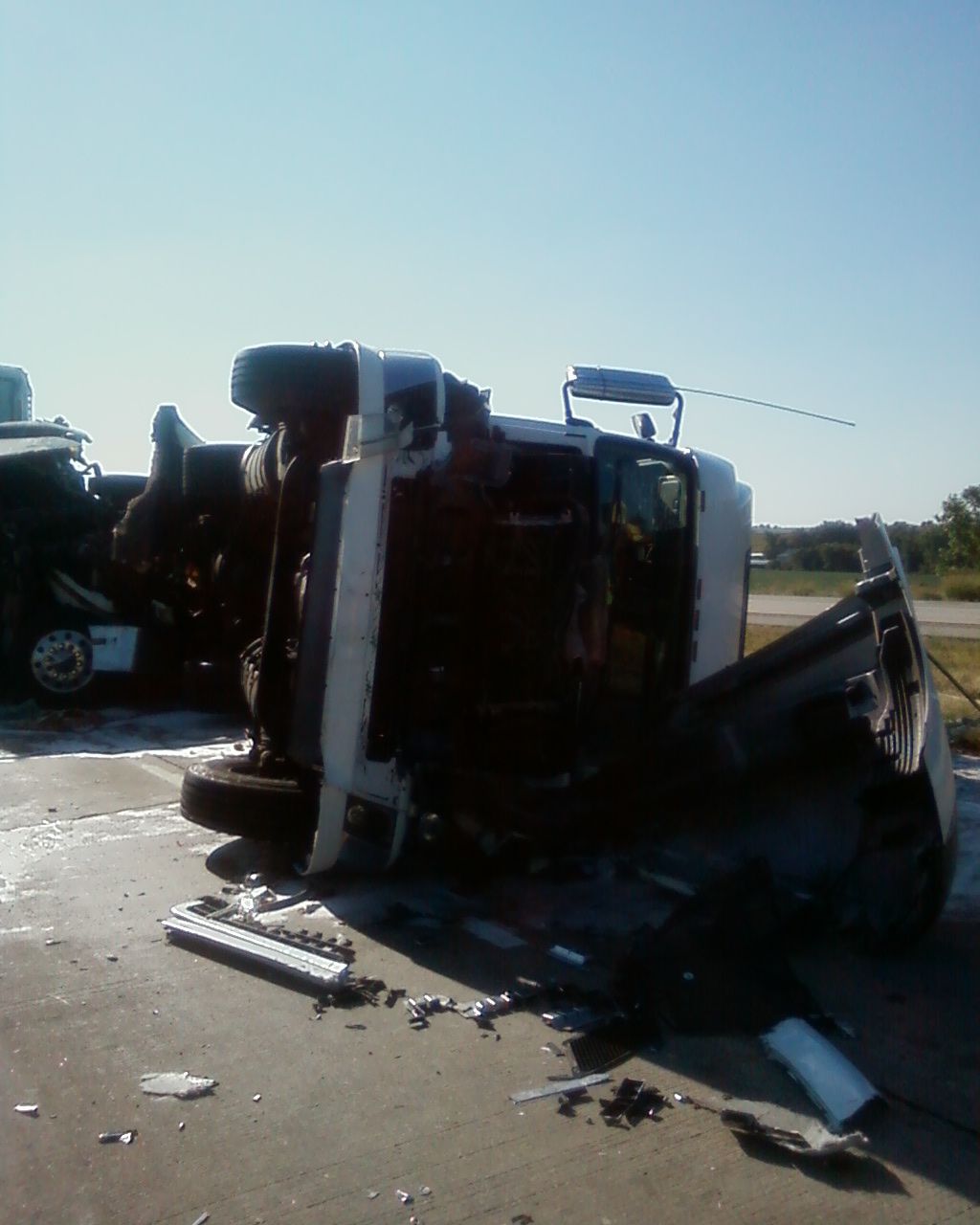
A semi truck accident that blocked the northbound lanes on I-55 for more than two hours on Tuesday morning may have been caused by driver fatigue. According to Illinois State Police, the driver of the truck lost control of his vehicle as he was crossing the Des Plaines River bridge in Channahon, Illinois. An initial investigation by Joliet District Illinois Police has determined that drowsiness caused the driver of the truck to lose control and crash. The driver was also cited for failing to reduce speed to avoid an accident and improper lane usage.

Driver fatigue significantly increases the risk of a truck driver being involved in an accident. A study conducted by a research team at Penn State found that the crash risk for truck drivers was more than three times higher in the last hour of an 11-hour day of driving than it was for the first hour. Reseachers also found that multi-day driving schedules (over seven days) were associated with significant crash risk increases.

A coalition of Consumer, Safety, and Labor groups has filed the initial legal brief in the third round of litigation which seeks to overturn longer truck diving and work hours which the Bush administration imposed in 2003. The hours-of -service rule increased the number of hours a trucker can drive to 11 consecutive hours each shift. In addition, the new Bush rules allow truckers to operate up to 17 more hours a week. Drivers can be on the road 77 hours a week instead of the 60 hours they were limited to under the old, pre-Bush rules. The Bush hours- of service rule also expands driving and work hours by reducing off-duty rest time at the end of the week from a full weekend (50 hours or more) to as little as 34 hours off-duty.

Almost 5,000 people a year are killed in truck crashes, including more than 650 truck drivers.

Driver Fatigue is a major factor in truck accidents.
.


August 23, 2009

Illinois Trucking Accidents

In April of 2008 a semitruck was speeding when it crashed into a Chicago train station. The accident killed two people and injured 21 more. Eleven people were critically wounded. Witnesses say the truck came off the freeway and hit a bus stop before slamming under a train overpass and then crashing up several steps of the train platform escalator.

While trucking accidents only account for one out of every nine traffic accidents as a whole, because of their size and weight, they account for 5,350 fatalities and 133,000 injuries (statistics from 2001). 94% of occupants of the cars and trucks in these accidents are either injured or killed. So as shown by the example of this accident a traffic accident involving a commercial truck can be much more dangerous than a car accident. Today there are over two million more trucks on the road than a decade ago which increases the likelihood of an accident.

There are many reasons why trucking accidents happen and why they are so much worse than the average traffic accident. Their freight can be one reason they are so dangerous. They may be carrying very heavy freight or it could be toxic/hazardous in some way. Truckers also work on deadlines. Like most people on a deadline they work faster to be sure they arrive on time which could result in an accident. Also truckers can get very tired from driving long periods of time. They get stressed and don't pay enough attention to the road. Also large trucks have blind spots behind and to the sides of them so they can't see other cars. The truck could also be overloaded. Plus there all the usual reasons for an accident like bad weather or mechanical failure.

In March 2004 an Illinois resident with a Wisconsin CDL caused an accident that killed a family of four. In June 2005 he was sentenced to ten months in prison for fraudulently obtaining a Wisconsin CDL and lying to federal grand jury investigators about it. The investigation had found that the address he used to obtain his Wisconsin CDL was also used by other Illinois residents to do the same. Apparently there were interpreters at the test site that were giving out the answers to the applicants. People without the official training and proper licensing to drive a truck also pose a higher risk for an accident.

Continue reading "Illinois Trucking Accidents" »