 Chicago Accident Lawyer Blog


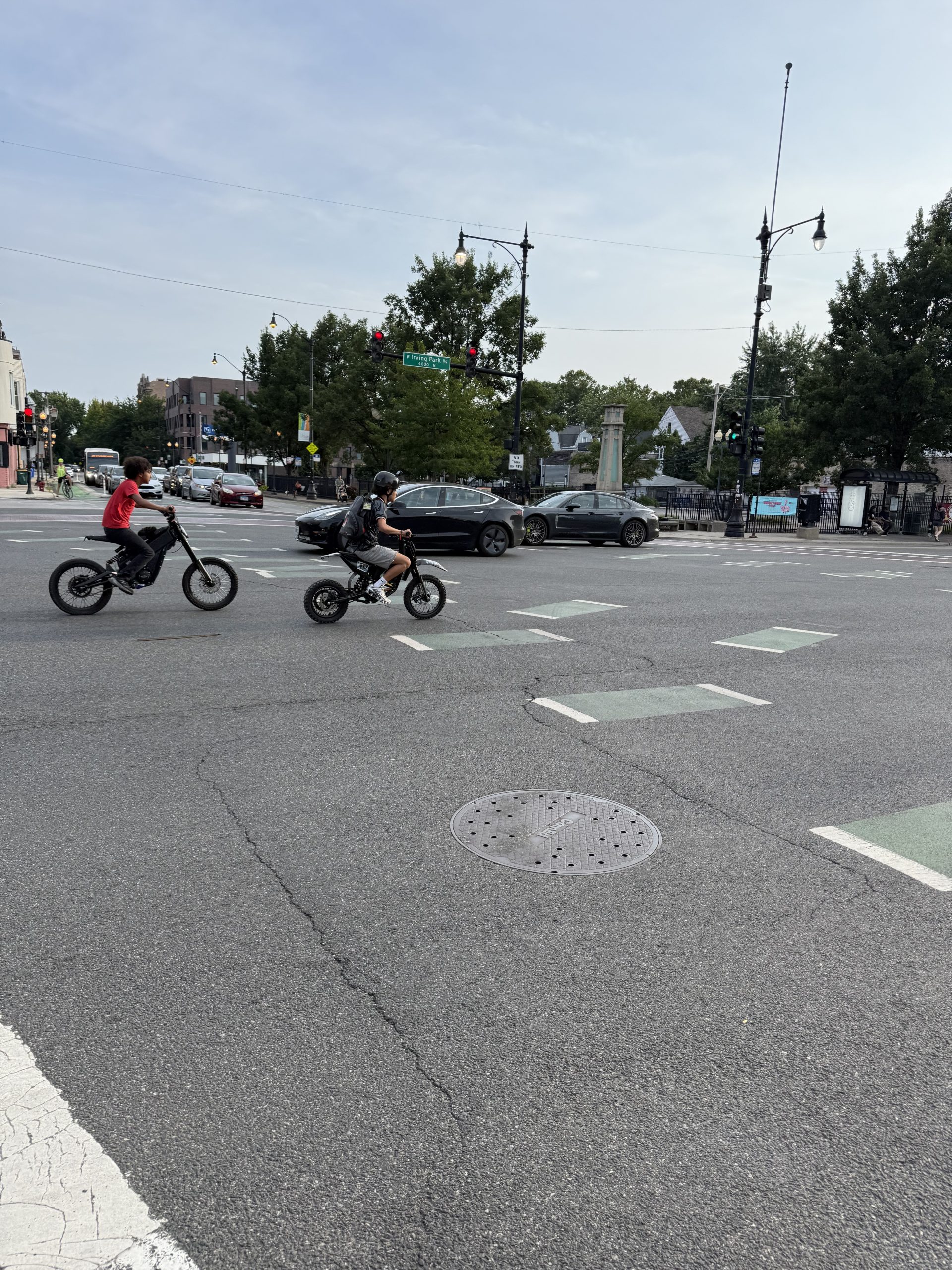
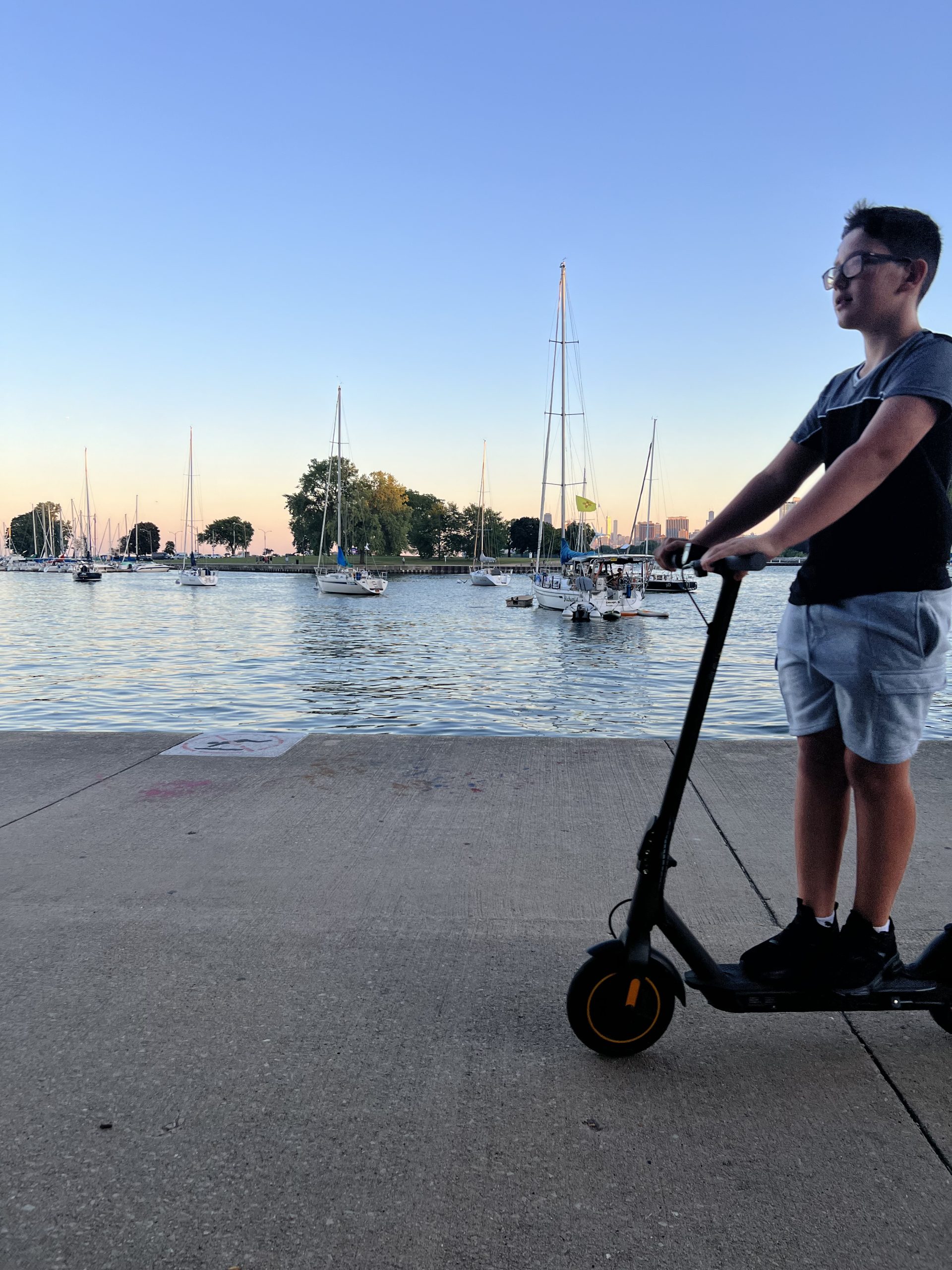
Chicago is a city meant to be experienced on foot or on a pedal bike. Residents walk to work, families stroll through neighborhood streets and parks, children ride bicycles, runners use the lakefront, and visitors explore the city on sidewalks and trails.
But the way people move through Chicago is changing rapidly.
E-bikes, electric scooters, dirt bikes, electric motorcycles, e-wheels and other motorized devices have become increasingly common. Many riders use these vehicles responsibly. But when motorized vehicles are operated at excessive speeds, on sidewalks, through pedestrian areas or in areas intended primarily for walking and recreation, they can create a serious danger for people who have little protection in a collision. The pedestrian injury lawyers of Zneimer & Zneimer P.C. have seen first hand the consequences of these collisions.
For pedestrians, the difference between an ordinary bicycle and a heavier, faster motorized vehicle can be significant.
A Recent Gold Coast Hit-and-Run Highlights the Concern
The issue has once again received attention following a recent Gold Coast hit-and-run. On August 17, 2026, the Chicago Sun-Times reported that Chicago police released photographs of a masked dirt-bike rider sought in connection with a crash that injured a woman. (Chicago Sun-Times)
A hit-and-run involving a dirt bike is particularly troubling because an injured someone on a pedal bike and may be left dealing with serious injuries while the person responsible disappears.
But the larger issue extends beyond one incident.
Chicagoans are increasingly encountering motorized vehicles in places where pedestrians reasonably expect to be able to walk without having a high-speed vehicle suddenly approach from behind or cross their path.
The Lakefront Trail Is a Particular Concern
Chicago’s Lakefront Trail is one of the city’s most valuable public spaces. It is used by commuters, runners, families with children, caregivers pushing strollers, tourists, recreational bicyclists and people simply enjoying a walk beside Lake Michigan.
The Chicago Park District describes the lakefront system as serving all of these different users and notes that the former combined-use trail was separated into pedestrian and bicycle trails to reduce congestion and improve safety. (Chicago Park District)
That separation only works if people respect it.
A family walking with a young child should not have to anticipate a high-speed motorized vehicle suddenly traveling through a pedestrian area. A casual bicyclist should not have to expect a motorized vehicle moving at substantially greater speed to approach unexpectedly. And a person jogging or walking should not have to constantly look over a shoulder because a motorized device may be approaching from behind.
The danger is especially pronounced because pedestrians do not have the protection of a vehicle around them.
A collision that might be a minor inconvenience between two larger vehicles can cause devastating injuries when one of the parties is a child, elderly person, runner, walker or bicyclist.
Sidewalks Are Not Motorways
Chicago’s laws recognize that sidewalks are fundamentally different from roadways.
For example, Chicago’s municipal code restricts bicycle riding on sidewalks except in specifically permitted circumstances, and Class 3 low-speed electric bicycles may not be operated on sidewalks. Chicago’s scooter-sharing rules similarly state that scooters generally may not be operated on sidewalks. (American Legal Publishing)
The reason is straightforward: sidewalks are places where pedestrians should be able to travel without having to contend with fast-moving vehicles.
Chicago has even taken additional steps to address sidewalk riding. In July 2026, the City expanded a no-scooter zone along part of Sheridan Road after concerns about frequent sidewalk riding. The restrictions use geofencing technology to prevent certain shared scooters from operating in the restricted area. (Chicago Sun-Times)
The fact that Chicago has implemented measures specifically aimed at reducing sidewalk riding demonstrates that this is not simply a matter of pedestrians being overly cautious. It is a recognized public-safety problem.
The Problem Is Not Micromobility Itself
There is an important distinction to make.
E-bikes and e-scooters can provide convenient, affordable transportation. Bicycling is an important part of Chicago’s transportation system. Responsible riders have every right to use facilities where these vehicles are permitted.
The problem arises when speed, vehicle type and location collide with pedestrian activity.
A person walking on a sidewalk should not have to compete with a vehicle traveling at a speed inappropriate for a pedestrian environment.
A parent walking with children should not have to worry about a dirt bike suddenly appearing behind them.
A runner on the lakefront should not have to anticipate a motorized vehicle traveling through an area designed for pedestrian use.
And when a rider ignores traffic rules, rides recklessly or leaves the scene after causing an injury, the consequences can be life-changing.
Chicago recently launched an e-scooter safety campaign specifically addressing rider behavior, sidewalk riding and compliance, following recent scooter-related deaths. (Chicago Sun-Times)
That is why obtaining medical attention and preserving evidence after an accident is important.
What Happens When the Rider Flees?
Hit-and-run accidents create another layer of difficulty.
A victim may remember only a few details: the color of the bike, the rider’s clothing, the direction the vehicle traveled or perhaps only the sound of an engine or electric motor.
There may, however, be surveillance cameras, photographs, eyewitnesses, nearby businesses, residential security cameras, cellphone footage or other evidence that can help identify what happened.
That evidence can disappear quickly.
For that reason, an injured pedestrian should not assume that nothing can be done simply because the rider left the scene.
Why an Experienced Chicago Personal Injury Lawyer Matters
Determining who is legally responsible for a pedestrian or bicyclist injury can be more complicated than simply identifying the person who was operating the vehicle.
An experienced personal injury attorney can investigate questions such as:
Who was operating the vehicle?
Where was the vehicle being operated?
Was the rider violating Chicago traffic or vehicle regulations?
Was the rider traveling at an unsafe speed?
Were there witnesses or surveillance cameras?
Was the vehicle privately owned, rented or otherwise connected to a company or another responsible party?
Was the rider insured?
Did the rider flee the scene?
What insurance coverage may apply to the injured victim?
What medical treatment and future damages will the victim require?
These questions can become particularly important when the vehicle is unfamiliar, the rider is unidentified or the accident occurs on a sidewalk, trail or other nontraditional location.
Why Consider Zneimer & Zneimer?
The personal injury lawyers of Zneimer & Zneimer P.C. focus on personal injury litigation and represents victims in pedestrian, bicycle, automobile, motorcycle and e-scooter accident cases. The firm’s website states that its attorneys have handled thousands of personal injury cases and have more than 23 years of personal injury litigation experience. (Zneimer & Zneimer)
The firm also specifically handles pedestrian accidents, bicycle accidents, bike-path accidents, hit-and-run accidents and e-scooter accidents. (Zneimer & Zneimer)
That experience matters because a pedestrian injury case is not simply about obtaining a police report and submitting medical bills to an insurance company.
Evidence needs to be preserved. Witnesses need to be identified. Surveillance footage may need to be located before it is overwritten. The circumstances of the collision need to be reconstructed. Applicable insurance coverage needs to be investigated. And the full extent of the victim’s injuries and future losses needs to be documented.
Zneimer & Zneimer states that its personal injury team can investigate and pursue claims involving medical expenses, lost wages, pain and suffering, disability and other accident-related damages. (Zneimer & Zneimer)
Chicago Should Be a City Where People Can Walk Safely
Chicago does not have to choose between modern transportation and pedestrian safety.
E-bikes, scooters and other forms of micromobility can be part of Chicago’s future. But that future must include clear rules, responsible operation and respect for pedestrians.
Sidewalks should remain places where people can walk.
Pedestrian sections of the lakefront should remain places where families, children, runners and casual walkers can enjoy the lake without fearing that a high-speed motorized vehicle will suddenly come through.
And when someone is injured because another person operates a motorized vehicle negligently or recklessly, the injured person should have an experienced advocate protecting their rights.
Injured by an E-Bike, Scooter, Dirt Bike or Other Motorized Vehicle?
If you or a family member has been injured by an e-bike, e-scooter, dirt bike, electric motorcycle or other motorized vehicle in Chicago, it is important to speak with a personal injury attorney promptly.
Evidence can disappear. Surveillance footage can be overwritten. Witnesses can become difficult to locate. And insurance companies may begin evaluating a claim before an injured person understands the full extent of their legal rights.
Zneimer & Zneimer offers free personal injury consultations and represents injured people throughout Illinois. The firm can be reached at 773-516-4100. (Zneimer & Zneimer)
When Chicago’s streets and trails become dangerous, injured pedestrians deserve more than sympathy. They deserve experienced legal representation.